
Kerr County Arrest Warrant Process
An arrest warrant is a judge's order telling officers to bring a named person into custody. Texas procedure requires the judge or magistrate to find probable cause first. The warrant names the person and the alleged offense. It belongs to one case file, not to a countywide list. Kerr County warrants can grow out of a felony investigation, a misdemeanor case, or a failure to appear. The court level and the issuing magistrate matter, because the record and any later hearing stay tied to that case.
KCSO Serves Orders Across the County
The Kerr County Sheriff's Office Warrant Division serves warrants along with civil papers, prisoner transport, and courthouse security. Nine sworn deputies and two clerks staff it. Even so, the county posts no public warrant list and runs no separate warrant desk number. Call KCSO's main line at 830-896-1216 to get routed. For custody, bond, or magistration questions, use the jail line at 830-896-1257. Neither call replaces the issuing court's answer on the case itself. KCSO lists the Warrant Division's responsibilities and office information on its site.
What an Arrest Warrant Identifies
Read the record closely. It should show the person's name, the issuing court, the cause number, the alleged offense, the issue date, and any bond information. Those details let the clerk pull the right Kerr County file fast. A short docket entry may leave out the signed order or later action, so ask whether the warrant is active, served, recalled, or replaced. Sealed or redacted files may hide some fields from the public copy. A blank online search does not prove no warrant exists.
| Warrant Number | Use the identifier printed on the court's record; no countywide format is published. |
|---|---|
| Named Person | Compare carefully and confirm identity with the issuing clerk. |
| Charge / Offense | Short description tied to the complaint or case. |
| Issuing Court | Determines the file location and recall authority. |
| Bond / Bail | Confirm the current amount and conditions with the court or jail. |
| Date Issued | Helps distinguish later docket events. |
Executed and Juvenile Records Differ
Once an adult arrest warrant is executed, Texas Code of Criminal Procedure 15.26 makes it public, and Article 18.01 opens the supporting affidavit in most cases. Before execution, access can differ, and a court may seal or redact protected details. Juvenile records are another matter entirely. Texas Family Code 58.010 keeps juvenile warrant records confidential, and no public-information request overrides that. In a Kerr County request, state the record category and date range, and expect the records office to review redactions before anything is released.
How Arrest Warrants Are Served
Service work is split by role in Kerr County. The sheriff's Warrant Division handles county duties. City police handle orders inside their own cities, and constables carry out their own statutory tasks. The issuing court's order and local assignment decide which officer acts; no single countywide team executes every warrant. After an arrest comes booking, then a magistrate. Kerr County's Magistrate Court sits inside the jail, and the county describes first appearance within 48 hours. That hearing covers the new custody event only. It does not decide whether the underlying charge is true.
First Appearance Is a Separate Step
At magistration the court explains the accusation and the person's rights, then weighs bail and release conditions. The jail clerk takes bond payments and gives custody updates. Once an arrest has happened, call the jail. The Warrant Division has no public roster to search. For the charging case, use the cause number: the County Clerk's criminal division covers county misdemeanors, and the District Clerk handles felony filings. Confirm each office's current location before visiting, since flood damage has moved some courthouse functions.
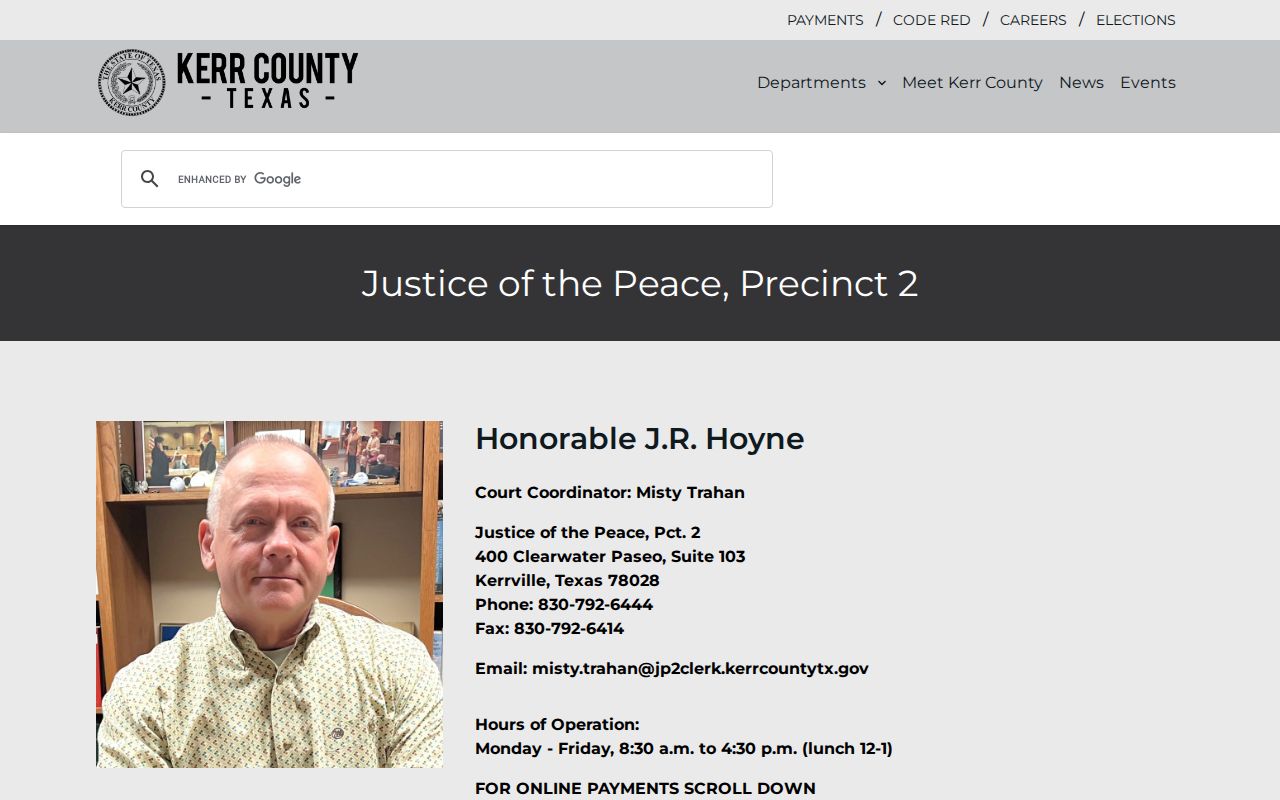
Justice of the Peace Precinct 2 can issue warrants for precinct matters. Its clerk confirms JP2 cases, and each precinct keeps its own records. Check JP2's official court information for the address and contacts.
Arrest Warrant vs Summons vs Bench Warrant
The three orders do different jobs. An arrest warrant authorizes custody on probable cause. A summons orders a person to appear without immediate arrest, and a bench warrant follows a missed court obligation. The record's title and the underlying Kerr County docket show which process applies; see the bench warrant process for recall routing.
| Feature | Arrest Warrant | Summons | Bench Warrant |
|---|---|---|---|
| What It Orders | Arrest under a court order | Appear or respond | Arrest tied to missed obligation |
| Basis | Probable cause of offense | Charging or notice procedure | Failure to appear or comply |
| Who Issues It | Judge or magistrate | Issuing authority under law | Judge in the pending case |
| How to Respond | Confirm, then get legal advice | Meet the listed deadline | Ask issuing court about recall |
The Issuing Court Keeps the Case
Each Kerr County court keeps its own warrants. Kerrville Municipal Court handles city Class C cases, and Ingram Municipal Court handles its city citations. JP1 through JP4 maintain precinct cases. The Kerr County Clerk covers County Court and County Court at Law misdemeanors, while the District Clerk handles felonies filed in the 198th and 216th District Courts. Call the clerk named on the citation or docket, and give the cause number. Serving a warrant is not the same as keeping its file. KCSO executes orders, but it does not hold every originating case. A statewide law-enforcement entry may help officers act, yet only the issuing court can confirm the order for the public.
Ask for a Record Copy by Case
Kerr County gives you several ways to ask KCSO for a record copy. Email works, and so does fax, mail, or a walk-in visit. Send requests to kerrcountysheriffrecords@co.kerr.tx.us, or fax them to 830-896-7380. Describe the record you want with a case, court, date range, or event so staff can find it. Fees, redactions, and how long a response takes all depend on the request, and juvenile or sealed material stays protected. A records request is not a live name search. For the signed court order, contact the issuing clerk.
Responding to a Confirmed Order
So a Kerr County court has confirmed an active warrant. Ask the court about your next required appearance right away, and have counsel request a recall or a bond if that fits. No general web search can promise a safe or clean resolution; the court sets its own process. If arrest is possible, get a lawyer's advice on surrender, bond, and timing. Keep the case number. Save written instructions too. After a payment, hearing, or bond posting, confirm the court entered the result and updated the order, since records can lag between the court, sheriff, and law-enforcement systems.
Important: Talk with a lawyer about surrender and bond before approaching a court or law-enforcement office with an active order.